Janmashtami Bhog Recipes Made at Home
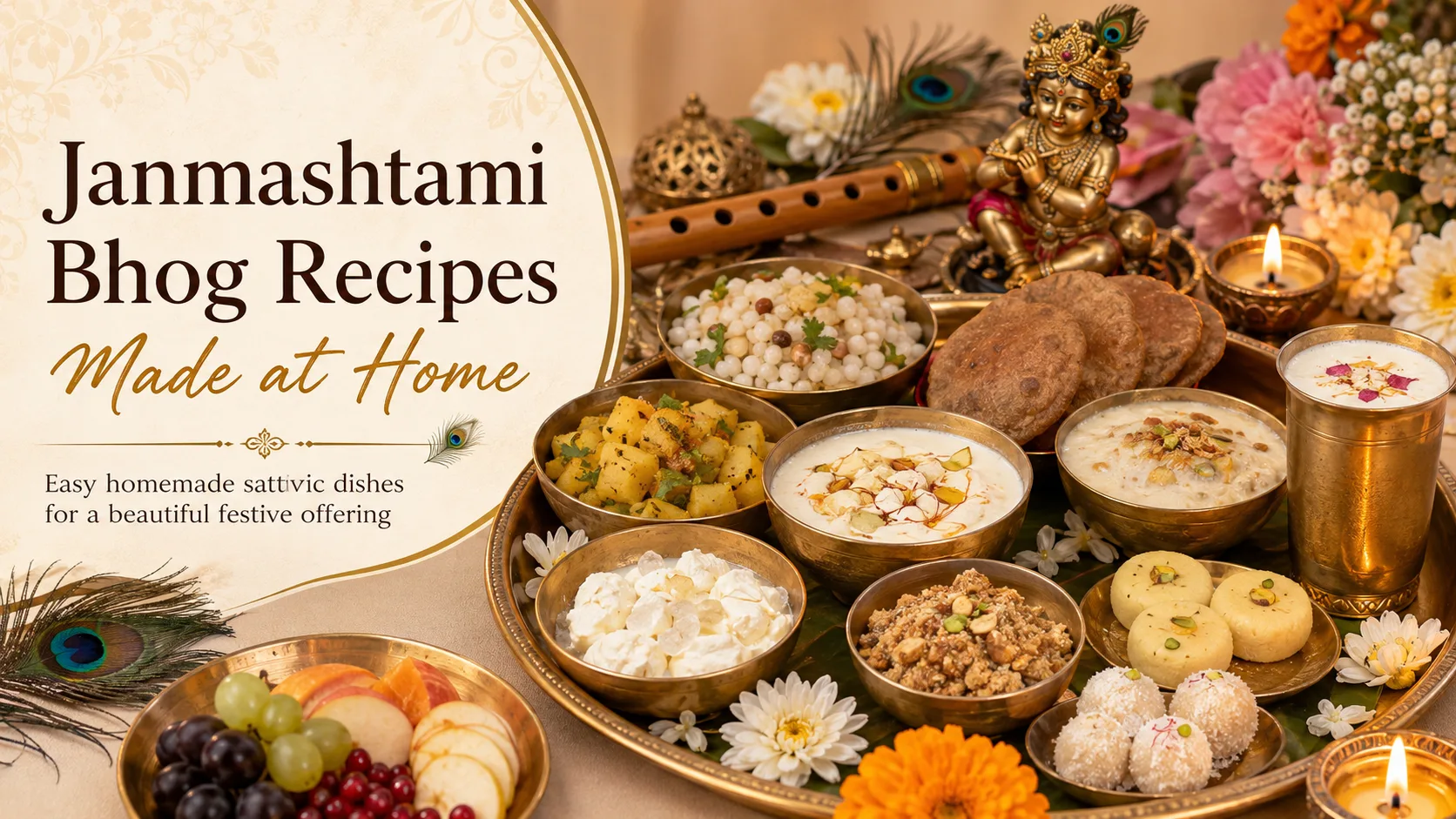
Janmashtami is a festival that fills the home with a special kind of warmth. There are flowers and decorations around the puja area, devotional songs playing in the background, and, of course, something delicious cooking in the kitchen.
For many families, preparing bhog for Lord Krishna is an important part of the celebration. The food is usually simple, fresh and sattvic, made with ingredients that are traditionally considered suitable for offering. Some families prepare a large spread, while others keep it simple with a few favourite dishes.
You don't need to spend the entire day in the kitchen to make a beautiful Janmashtami bhog. A handful of homemade dishes, prepared with care, can make the celebration feel just as special.
Here are some easy Janmashtami bhog recipes you can prepare at home.
1. Makhan Mishri
When we think about Krishna, makhan mishri is one of the first foods that comes to mind.
Fresh white butter is served with small pieces of mishri. It is incredibly simple, but it has a beautiful connection with Krishna's childhood stories.
If you have homemade butter, use it. Freshly churned butter with a little mishri makes a lovely offering.
2. Dhaniya Panjiri
Dhaniya panjiri is especially popular during Janmashtami. Roasted coriander powder is combined with ghee, sugar and nuts to make a fragrant mixture.
The aroma of coriander roasting in ghee is enough to make the kitchen feel festive.
You can prepare panjiri a few hours before the puja and keep it covered until it is time to offer the bhog.
3. Makhana Kheer
Makhana kheer is creamy, mildly sweet and perfect for a festive bhog plate.
Roast the makhana lightly in ghee, crush some of it and cook everything slowly in milk. Add sugar and cardamom, then finish with chopped almonds or pistachios.
Don't rush the cooking. A few extra minutes on low heat allow the flavours to come together nicely.
4. Panchamrit
Panchamrit is traditionally prepared as part of many Hindu pujas. Milk, yogurt, honey, ghee and sugar are combined to make this simple sacred preparation.
Every family may have its own proportions and additions, so following your household tradition is always a good idea.
Prepare it fresh and keep it chilled until the puja.
5. Homemade Peda
A plate of homemade pedas can make the bhog feel complete.
Milk solids are cooked with sugar and cardamom until the mixture becomes thick. Once it cools slightly, shape it into small round pedas.
You can press a pistachio or almond into the centre of each one for a simple festive finish.
6. Coconut Ladoo
Coconut ladoos are useful when you want a sweet that doesn't take too much time.
Fresh or desiccated coconut can be cooked with milk or condensed milk until the mixture thickens. Add cardamom, let it cool slightly and roll into small balls.
They are easy to make and look beautiful on a bhog thali.
7. Sabudana Kheer
If you are preparing sabudana for fasting, save some for this dessert.
Soaked sabudana is slowly cooked in milk until soft. Sugar and cardamom give it a familiar Indian dessert flavour, while chopped nuts add a little crunch.
It can be served warm or chilled.
8. Rajgira Halwa
Rajgira halwa is another traditional fasting-friendly sweet.
Roast rajgira flour in ghee until it becomes aromatic. Add liquid slowly while stirring continuously to avoid lumps. Sweeten it and finish with cardamom and chopped nuts.
It is best served warm.
9. Fruit Bhog
A fruit offering is one of the easiest things to prepare, especially if you don't have much time.
Choose fresh seasonal fruits such as bananas, apples, pomegranate, grapes, papaya or melon. Wash them well and arrange them neatly on a clean plate.
Sometimes the simplest offering is also the most beautiful.
10. Sweet Lassi
A glass of chilled sweet lassi works wonderfully alongside a festive meal.
Whisk thick yogurt with milk, sugar and cardamom until smooth and creamy. Keep it refrigerated until serving.
For a special touch, garnish it with chopped pistachios or a few saffron strands.
11. Kuttu Ki Puri
If your family observes a Janmashtami fast, kuttu ki puri is a popular choice for the main meal.
Buckwheat flour is mixed with mashed potato and fasting-friendly seasonings. The dough is shaped into small puris and fried until golden.
Serve them hot with vrat wale aloo or plain yogurt.
12. Vrat Wale Aloo
Soft potatoes cooked with cumin and green chilli make a simple companion to kuttu puri.
The recipe doesn't require many ingredients, which is exactly why it works so well for a busy festival day.
Cook the potatoes until they pick up a little colour from the pan. That small step adds much more flavour.
13. Sama Rice Khichdi
Sama rice khichdi is a comforting option for a fasting meal.
Cook sama rice with potatoes, peanuts, cumin and fasting-friendly seasonings. Keep the consistency slightly soft and serve it hot.
A spoonful of fresh yogurt on the side makes the meal even better.
14. Sabudana Khichdi
Soft sabudana with roasted peanuts and potatoes is another Janmashtami favourite.
The trick is to soak the sabudana properly. It should be soft enough to press between your fingers without becoming watery.
Once soaked correctly, the dish comes together very quickly.
15. Aloo Tikki
Aloo tikki is a nice option when you want a snack for the evening.
Boiled potatoes are mashed with roasted peanuts, green chilli and permitted fasting spices. Shape them into small patties and cook them on a tawa with ghee until crisp.
Serve them hot with yogurt or a suitable vrat chutney.
How to Prepare a Simple Janmashtami Bhog Thali
You don't have to make every dish on this list. A small homemade spread is more than enough.
For example, you could prepare:
- Makhan mishri
- Panchamrit
- Dhaniya panjiri
- Makhana kheer
- Kuttu ki puri
- Vrat wale aloo
- Seasonal fruits
- Homemade peda
If you are expecting guests, add sabudana khichdi, coconut ladoos and sweet lassi to make the meal more generous.
The best part is that many of these dishes can be prepared ahead of time, so you aren't stuck in the kitchen when the celebrations begin.
Tips for Making Janmashtami Bhog at Home
Keep the food fresh. Whenever possible, prepare the bhog close to the time of the offering.
Plan the menu early. Choose a few dishes rather than trying to cook everything. This makes the day much less stressful.
Prepare sweets beforehand. Ladoos, panjiri and some types of kheer can be prepared ahead of the main meal.
Use clean utensils. Many families use separate or freshly cleaned utensils for preparing food for puja.
Follow your family tradition. Janmashtami fasting and bhog customs differ from one household to another. Ingredients permitted for fasting may also vary, so follow the traditions you normally observe.
Final Thoughts
Janmashtami bhog doesn't have to be elaborate to feel special. A plate of makhan mishri, a bowl of homemade kheer, some panjiri, fresh fruits and a few traditional sweets can make a beautiful offering.
What matters most is the care that goes into preparing it.
For many of us, festivals are remembered through food—the smell of ghee in the kitchen, homemade sweets being shaped by hand, and the family gathering together after the puja. That is what makes a simple homemade Janmashtami bhog so memorable.
Prepare what your family enjoys, keep the food fresh and simple, and enjoy the celebration together.
Wishing you and your family a joyful and blessed Janmashtami!
Note: Fasting and bhog traditions vary by region and family. Follow the ingredients and preparation practices traditionally observed in your household.