Soya Chunks: Uses, Cooking Tips, Benefits and Storage Copy Title
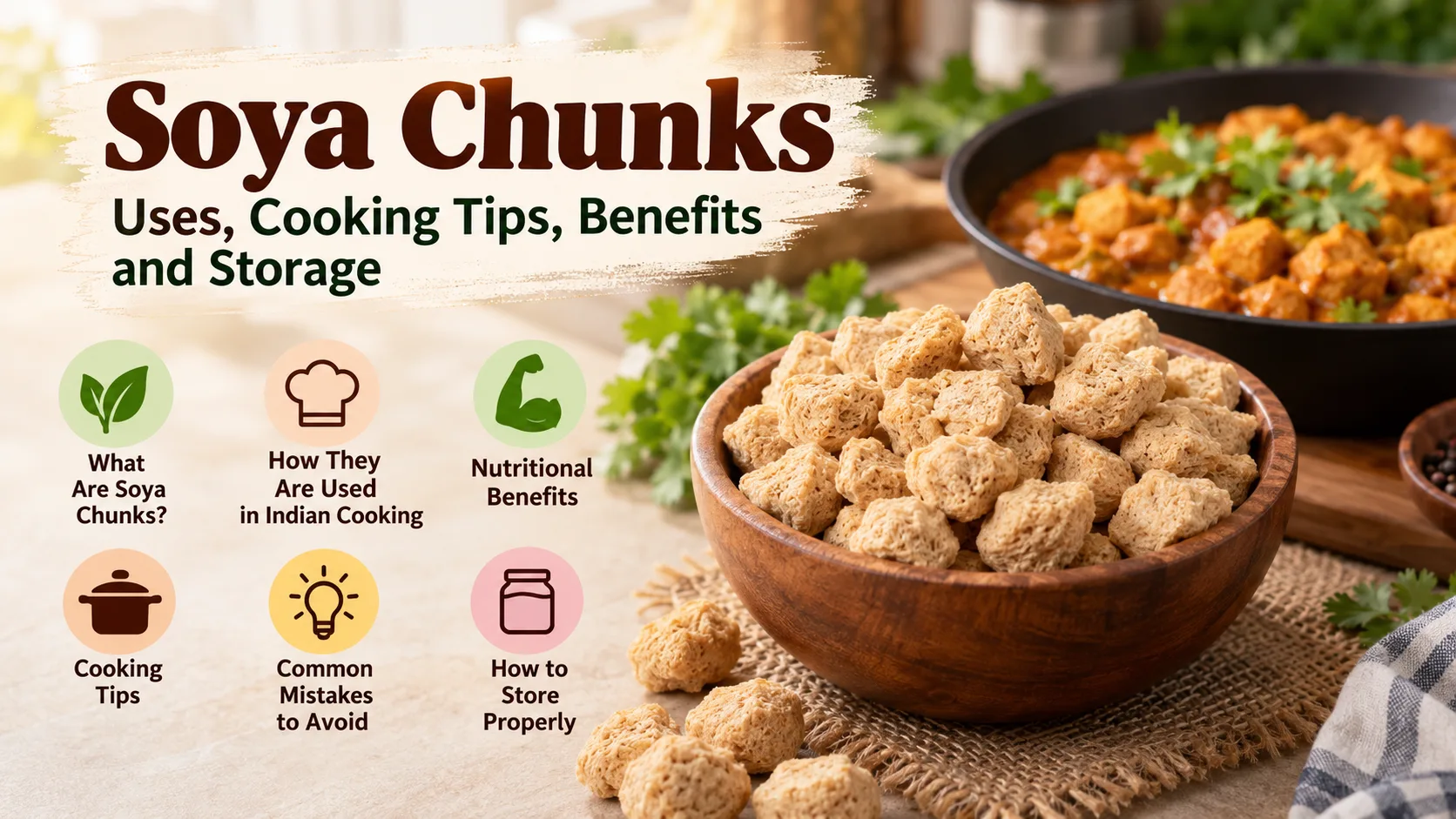
Soya chunks are a popular ingredient in Indian kitchens, especially for people looking to add variety to vegetarian meals. They are commonly used in curries, pulao, biryani, dry dishes and Indo-Chinese-style food. Their distinctive texture and ability to absorb flavours make them suitable for many different cooking styles.
However, there is more to soya chunks than simply adding them to a curry. Choosing the right type, preparing them properly and storing them safely can make a noticeable difference to your cooking experience.
In this guide, you will learn what soya chunks are, how they are used in Indian food, what to know about their nutritional value, how to avoid common texture problems and how to store them correctly.
What Are Soya Chunks?
Soya chunks are a dried soy-based food product generally made from defatted soy flour. They are often sold in packets and need to be softened before being used in most dishes.
In India, they are also known by names such as meal maker, soya nuggets and nutri nuggets. Textured vegetable protein, or TVP, is a broader term used for similar products.
Soya chunks have a relatively mild flavour when compared with heavily seasoned foods. Their texture is firm and slightly chewy, allowing them to work well in dishes with gravies, spices and sauces.
Because they are sold in dried form, they are convenient to keep in a pantry when stored according to the manufacturer's instructions.
Why Are Soya Chunks Popular in Indian Cooking?
Soya chunks are used in a variety of Indian meals because they can be adapted to different cooking methods and regional flavours.
Here are some reasons they are popular:
-
Versatility: They can be used in gravy-based dishes, rice preparations, dry curries and snacks.
-
Plant-based protein: Soy is a source of plant protein, making soya chunks one option for people planning vegetarian meals.
-
Flavour absorption: Their mild flavour allows them to take on the taste of the spices and sauces used in a dish.
-
Convenient storage: Dried soya chunks are easy to store when the package is kept dry and properly sealed.
-
Meal variety: They provide an alternative texture to the vegetables, lentils and other ingredients commonly used in Indian cooking.
Their suitability for a particular meal depends on the dish, the product and your personal dietary needs.
Different Types of Soya Chunks
Soya products are available in different shapes and sizes. Knowing the difference can help you select the right product for your cooking.
Regular Soya Chunks
Regular soya chunks are relatively large pieces with a firm, chewy texture after preparation. They are commonly used in curries, pulao and biryani, where the pieces remain noticeable in the finished dish.
Mini Soya Chunks
Mini soya chunks are smaller and can be easier to combine with vegetables, rice and sauces. They may be suitable when you want the soy pieces distributed more evenly throughout a meal.
Soya Granules
Soya granules have a much smaller, crumb-like texture. They are often used in preparations where a minced consistency is preferred, such as soya keema-style dishes.
Helpful tip: Regular chunks, mini chunks and granules are not always interchangeable. Consider the texture you want in the finished dish before choosing a product.
How Soya Chunks Are Used in Indian Dishes
One of the main advantages of soya chunks is that they can be used in several types of dishes without requiring the same flavour profile every time.
Soya Chunks Curry
In curry-based dishes, soya chunks are combined with a seasoned gravy. They are commonly served with roti, chapati, paratha or rice.
Soya Chunks Pulao
Soya chunks can be included in pulao alongside rice, vegetables and aromatic seasonings. This creates a different texture from a vegetable-only rice dish.
Soya Chunks Biryani
In biryani-style preparations, the chunks are paired with aromatic rice and spices. The quality of the final result depends on the rice texture, preparation method and seasoning.
Soya Chunks Dry Fry
Dry preparations are suitable for people who prefer less gravy. Removing excess moisture from the prepared chunks is particularly important for achieving a better texture.
Soya Chunks Manchurian
Soya chunks can also be used in Indo-Chinese-inspired dishes with savoury sauces. They are an option for snacks, starters or side dishes.
These examples explain the different uses of soya chunks rather than provide complete recipes. Each dish has its own cooking requirements.
How to Choose Good-Quality Soya Chunks
Choosing an appropriate product is an important first step towards getting a good result.
Check the packaging: Select packets that are properly sealed and free from visible damage or moisture.
Read the label: Look at the product name, ingredients, storage directions and preparation instructions.
Choose the right size: Regular chunks are suitable for dishes where larger pieces are preferred, while granules may work better for minced-style preparations.
Check the date: Review the manufacturer's best-before or expiry information before purchasing.
Consider your dietary needs: Soya chunks are made from soy. Anyone with a soy allergy should avoid them and check product labels carefully.
Why Do Soya Chunks Sometimes Become Rubbery?
A common question among home cooks is why soya chunks sometimes feel tough, rubbery or excessively chewy.
Several factors may affect their texture.
They may not be softened properly
Dried soya chunks generally need to be softened before being added to most dishes. Follow the preparation instructions on the package and check that the centres are suitably tender.
Too much water may remain inside
Excess moisture can affect the consistency of a gravy and make dry preparations harder to brown. Removing excess water after softening the chunks can help.
The product size may not suit the dish
Large chunks and granules have different textures. Using a suitable type can make the finished dish more enjoyable.
Cooking conditions may be unsuitable
The final texture depends on the product, preparation method and cooking time. Following a reliable recipe for the specific dish is more useful than applying one cooking time to every preparation.
Practical tip: Check the texture before adding soya chunks to the final dish. This helps you identify problems early instead of discovering them after the meal is finished.
Are Soya Chunks Nutritious?
Soy is a source of plant protein, and soya chunks can contribute protein to a vegetarian diet. Their nutritional value depends on the product and the amount consumed.
A few points are worth keeping in mind:
-
Soya chunks can be one part of a varied vegetarian eating pattern.
-
Their nutritional contribution depends on portion size and the rest of the meal.
-
The cooking method and accompanying sauces can change the overall nutritional profile of a dish.
-
A balanced diet should include a variety of foods rather than relying on a single ingredient.
Soya chunks are not automatically a complete meal on their own. Pairing them with other foods can help create variety in everyday eating.
People with soy allergies should avoid soya chunks. If you have specific medical or dietary concerns, seek advice from a qualified healthcare professional or registered dietitian rather than relying on general food information.
Common Mistakes to Avoid When Cooking Soya Chunks
Ignoring the package instructions
Different products may have different preparation requirements. Check the label before cooking, particularly when trying a new brand.
Not removing excess moisture
Water left inside the chunks can dilute the gravy or affect the texture of a dry dish.
Choosing the wrong product type
Large chunks, mini chunks and granules work differently. Choose the form that suits the intended dish.
Expecting them to taste the same in every recipe
Soya chunks have a relatively mild flavour. The final taste depends on the surrounding spices, sauce and cooking method.
Overlooking safe storage
Dried products need protection from moisture, while prepared soya chunks must be handled as perishable food.
How to Store Soya Chunks Properly
Storage depends on whether the soya chunks are still dried or have already been prepared.
Storing Dried Soya Chunks
Keep dried soya chunks in a cool, dry place away from direct sunlight and moisture. Once the packet is opened, use a clean, dry, airtight container if appropriate for the product.
Follow the storage instructions and use the product within the period indicated by the manufacturer.
Storing Prepared Soya Chunks
Once soya chunks have been soaked, boiled or cooked, they need more careful handling.
-
Refrigerate prepared chunks promptly in a clean, covered container.
-
Keep them at a safe refrigerator temperature.
-
Follow applicable food-safety guidance for storage duration.
-
Reheat cooked dishes thoroughly before serving.
-
Avoid repeatedly cooling and reheating the same portion.
-
Discard prepared food if it has been left unrefrigerated for too long or its storage history is uncertain.
Do not rely on smell or appearance alone to determine whether prepared food is safe.
Frequently Asked Questions About Soya Chunks
What are soya chunks also called?
They are often called meal maker, soya nuggets or nutri nuggets. Textured vegetable protein is a broader term for related soy-based products.
Can soya chunks be used in everyday Indian meals?
Yes. They can be used in curries, pulao, biryani, dry dishes and Indo-Chinese-inspired preparations.
Are soya chunks and soya granules the same?
They are related products, but their sizes and textures differ. Chunks are larger pieces, while granules are smaller and have a crumb-like texture.
Why should excess water be removed from soya chunks?
Excess water can dilute sauces and affect the texture of dry preparations. Removing it helps the chunks work better in the intended dish.
Are soya chunks a source of plant protein?
Yes. Soy is a source of plant protein, and soya chunks can contribute protein to a vegetarian meal. The overall nutritional value depends on the product and the rest of the diet.
How should dried soya chunks be stored?
Keep them in a dry place, protect them from moisture and follow the storage instructions on the packet. Use a clean, dry container after opening if suitable.
Can people with a soy allergy eat soya chunks?
No. Soya chunks are soy-based products, so people with a soy allergy should avoid them and check labels carefully.
Final Thoughts
Soya chunks are a versatile ingredient that can be used in many types of Indian cooking. Understanding the different product types, choosing the right form for a dish and paying attention to preparation and storage can help you use them more effectively.
Whether you prefer curry, rice dishes or dry preparations, begin with the product instructions and choose a cooking method that suits your meal.
For more practical Indian cooking guides, ingredient explainers and kitchen tips, explore the informational articles on ApnaRecipe.