Kitchen Hacks: 25+ Smart Tips to Make Cooking Easier
Devang Patiwala
Sep 26, 2026
• 13 min read
• 51
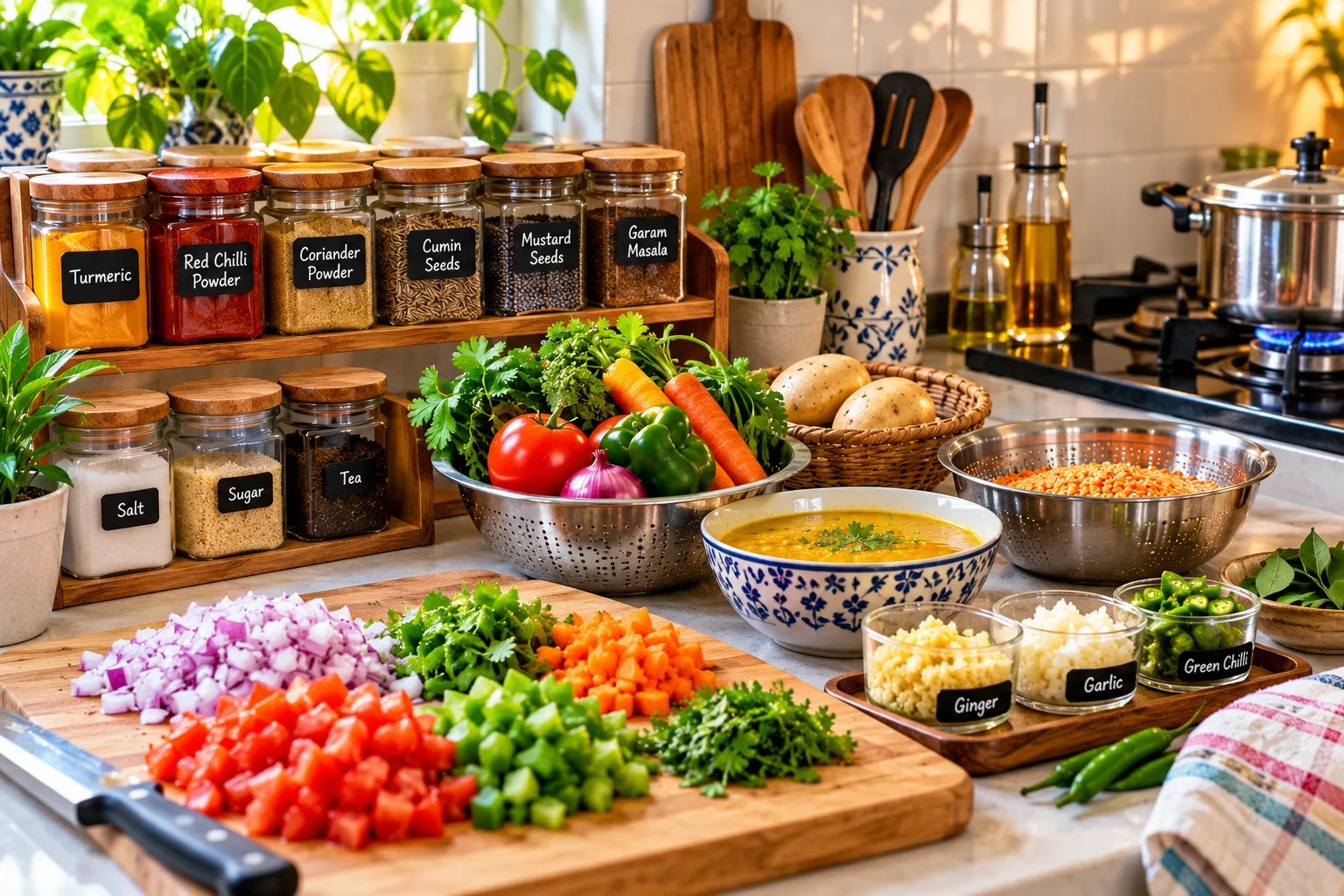
Cooking every day becomes much easier when a few small habits do the heavy lifting. The best kitchen hacks are not complicated tricks or viral experiments. They are simple ways to prepare ingredients, arrange your workspace, store food safely and fix common cooking problems.
For an Indian home cook, this might mean soaking dal before a busy morning, keeping ginger-garlic ready for the week, or arranging tadka ingredients near the stove. These steps save time, reduce waste and make dinner less stressful. Whether you are a beginner, student, professional or family cook, start with two or three that suit your routine, then build from there.
What Are Kitchen Hacks?
Kitchen hacks are practical methods that make cooking, cleaning, organising or storing food more convenient. A good hack solves a clear problem: it reduces preparation time, prevents waste, keeps ingredients easy to find or helps you recover from a small cooking mistake.
The most useful cooking hacks work because they improve your routine—not because they promise a miracle. Always use common sense, follow food-safety basics and test a new tip with a small quantity before making it part of your regular cooking.
25+ Kitchen Hacks That Actually Make Cooking Easier
Time-Saving Cooking Hacks
1. Read the recipe before switching on the stove
What it is: Spend a minute checking ingredients, quantities and cooking order before you begin.
How to do it: Place all ingredients on the counter and identify anything that needs soaking, thawing or preheating. This is often called mise en place, or having everything ready before cooking.
Why it helps: It prevents last-minute searching while onions are burning in the pan. For example, you can keep cumin, turmeric and chilli powder beside the kadai before starting a sabzi.
2. Make a short weekly prep list
What it is: Plan a few repeatable preparation jobs instead of trying to cook everything in advance.
How to do it: Once or twice a week, wash only the vegetables you will use soon, peel a small quantity of garlic and portion commonly used ingredients. Do not wash produce for long-term storage unless it will be dried thoroughly.
Why it helps: You reduce daily chopping without creating a large batch that may spoil.
Indian kitchen example: Keep chopped beans or carrots ready for a quick mixed vegetable dish, but store them dry in a clean, covered container in the refrigerator.
3. Prepare a basic onion-tomato masala
What it is: Cook a batch of onion-tomato base for dishes you make regularly.
How to do it: Cook onions, ginger-garlic and tomatoes with your usual spices. Cool it quickly, divide it into meal-sized portions and refrigerate or freeze in suitable containers. Reheat only the portion you need.
Why it helps: It gives you a head start on rajma, chana, paneer or vegetable gravies.
4. Keep a “first-use” tray in the refrigerator
What it is: Place opened, cut or soon-to-expire ingredients in one visible section.
How to do it: Put half a capsicum, leftover coriander, an opened packet of tofu or a small bowl of cooked vegetables together in a labelled tray.
Example: The tray can guide a quick pulao, sandwich filling or vegetable fried rice instead of allowing small leftovers to be forgotten.
5. Use one chopping board in a fixed prep zone
What it is: Give chopping, peeling and measuring a permanent place on the counter.
How to do it: Keep the board, knife, peeler and a scrap bowl together. Wash and dry the board after use, and use separate boards or careful cleaning for raw and ready-to-eat foods.
6. Batch-cook only ingredients that reheat well
What it is: Prepare components, not necessarily complete meals.
How to do it: Cook plain rice, boiled potatoes, roasted vegetables or a masala base in useful quantities. Store them safely and use them in different dishes.
Why it helps: One preparation can become pulao, a filling, a curry or a lunchbox dish.
Limitation: Delicate fried foods and creamy dishes may not keep the same texture after reheating.
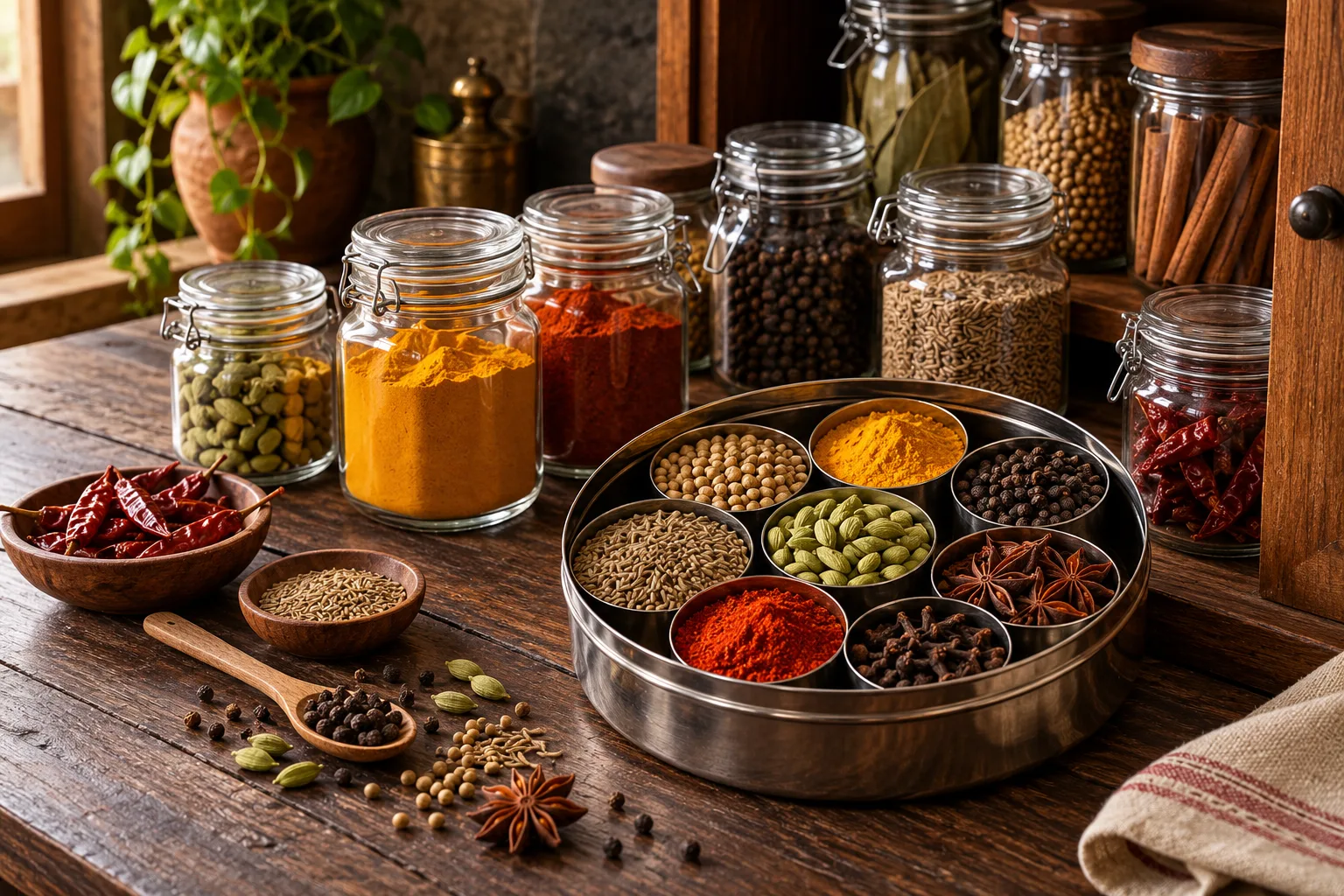
7. Keep a small “tadka box” near the stove
What it is: Store frequently used whole spices in a clean, airtight spice box.
How to do it: Fill it with only the spices you use often, such as cumin, mustard seeds, fennel, dried red chilli and curry leaves if appropriate. Refill from larger containers when needed.
Why it helps: You can start dal or a vegetable dish without opening several jars.
8. Measure rice and dal with the same cup
What it is: Use one dedicated measuring cup for staples.
How to do it: Keep a cup inside the rice or dal container and use it consistently. Note the water ratio that works for your cooker, pot and preferred texture.
Why it helps: Consistent measuring makes everyday cooking more predictable, especially for beginners.
Food Storage and Freshness Hacks
9. Store herbs dry, not wet
What it is: Reduce excess moisture before storing coriander, mint or curry leaves.
How to do it: Remove damaged leaves, gently dry the herbs and wrap them loosely in a clean paper towel before placing them in a covered container or bag. Check them regularly.
Why it helps: Excess surface moisture can make delicate herbs deteriorate faster.
10. Keep ginger and garlic in usable portions
What it is: Prepare small portions rather than one very large jar.
How to do it: Store whole ginger and garlic in a cool, dry, well-ventilated place as appropriate. If you make a paste, refrigerate it in a clean, covered container and use a dry, clean spoon each time. For longer storage, freeze small portions and label them.
Why it helps: Portioning reduces repeated exposure to air and contamination.
Safety note: Do not store homemade garlic-in-oil mixtures at room temperature. Use safe refrigeration or freezing practices.
11. Keep potatoes and onions separate
What it is: Store these staples in separate, ventilated spaces.
How to do it: Use baskets or breathable containers away from direct sunlight and excess heat. Check regularly and remove spoiled pieces.
12. Transfer dry ingredients into labelled airtight containers
What it is: Move frequently used flour, rice, poha, dals and spices into clean, dry containers.
How to do it: Write the ingredient name and, when useful, the purchase or opening date. Keep older stock in front and newer stock behind.
Why it helps: You can see your supplies quickly and reduce the chance of moisture or pantry pests affecting the food.
13. Freeze bread in small portions
What it is: Freeze bread when you know it will not be used soon.
How to do it: Separate slices with a clean barrier if needed, seal them well and remove only what you need. Toast or thaw according to the bread type.
Why it helps: It can reduce waste when a whole loaf is too much for your household.
14. Cool leftovers promptly and label them
What it is: Treat leftovers as food that needs a clear storage plan.
How to do it: Transfer food to shallow, covered containers so it cools more efficiently, refrigerate it promptly and write the date. Reheat only the portion you will eat and follow your refrigerator’s guidance.
Why it helps: Labelling prevents forgotten containers and helps you use older food first.
Safety note: Never decide that food is safe only because it looks or smells normal. When in doubt, discard it.
15. Buy spices in quantities you can use while fresh
What it is: Match your spice purchase to your cooking frequency.
How to do it: Store spices away from heat, light and moisture in airtight containers. Use a dry spoon and avoid shaking spices directly over a steaming pan.
Indian Kitchen Hacks for Everyday Cooking
16. Soak dal according to the dish and your schedule
Soaking can shorten cooking time for some dals and legumes, but it is not required for every dal. Rinse the dal, soak it in clean water when the recipe calls for it, then drain and cook properly. For a quick weekday meal, prepare a small planned portion in the morning and refrigerate it if you are not cooking immediately.
17. Rest roti dough before rolling
After kneading atta with water, cover and rest the dough briefly before rolling. This gives the flour time to hydrate and can make the dough easier to handle. Keep the dough covered so it does not dry out. If rotis become hard, check the dough moisture, rolling thickness and cooking time rather than adding excessive oil.
18. Rinse rice consistently
Rinse rice until the water is reasonably clear, then use the same rice-to-water method that suits your variety and cooking vessel. If rice becomes sticky, spread it gently on a wide plate to release steam rather than stirring aggressively. For a planned rice meal, classic Chinese vegetable fried rice is one useful way to turn suitable leftover rice into a new dish.
19. Add paneer at the right stage
Paneer can become chewy if cooked too long in a strongly simmering gravy. Add cubes toward the end of cooking and heat until warmed through. If using packaged paneer, follow the pack instructions; a brief soak in warm water is a commonly used kitchen practice for softening it, but it will not repair paneer that has already been overcooked.
20. Make ginger-garlic portions easy to reach
Freeze homemade ginger-garlic paste in small, labelled portions rather than one large block. A teaspoon-sized portion is convenient for dal, sabzi or gravy. Use a clean utensil and keep the remaining paste cold. For a special meal, you can pair this prep habit with a dish such as traditional Gujarati Undhiyu, which uses several vegetables and aromatics.
21. Protect spices from a hot, steamy pan
Measure powdered spices into a small bowl before cooking. Add them after lowering the heat or mixing them with the wet base, depending on the recipe. This helps prevent burnt spices and makes it easier to control salt, chilli and turmeric.
22. Keep vegetables cut for the same cooking time together
Group quick-cooking vegetables such as capsicum and leafy greens separately from firm potatoes or carrots. Add each group at the stage it needs. This prevents soft vegetables from turning mushy while harder pieces are still raw.
23. Give cooked dal a final consistency check
Dal often thickens as it sits. Keep a little hot water nearby and adjust the consistency after reheating, not just immediately after pressure cooking. Add salt and a fresh tadka near the end when appropriate. Serve with easy Indian lunch ideas when you want a simple meal plan.
Kitchen Organization Hacks
24. Arrange ingredients by frequency of use
Keep everyday staples at eye level or within easy reach. Move occasional baking ingredients, serving ware and bulk stock to higher or lower shelves.
Why it helps: Less searching means less time and fewer half-open packets on the counter.
25. Use a “use first” basket in the pantry
Place opened packets, small leftover quantities and items nearing their best-before date in one basket. Check it before grocery shopping.
Why it helps: It encourages planned use without treating a date label casually. Inspect packaging and follow the manufacturer’s storage instructions.
26. Store lids vertically where possible
Use a divider, rack or clean box to keep pan and container lids upright.
Why it helps: You can identify the right lid quickly instead of making a stack fall over.
27. Keep a small cleaning kit near the work area
Place a cloth, brush and suitable dish-cleaning supplies within reach, but away from food and cooking flames.
Why it helps: Wiping spills immediately is easier than cleaning hardened masala later. Never mix cleaning chemicals, and follow product directions.
Cooking Mistake Fixes
28. If food is too spicy
Add more of the unsalted main ingredients, such as cooked vegetables, dal or gravy base, depending on the recipe. A little dairy or coconut may balance some dishes, but it changes the flavour and is not suitable for every recipe. Adding more salt or sugar is not a universal fix.
29. If dal is too thick
Add hot water gradually, stir and simmer briefly. Taste again because dilution can reduce salt and spices. If the dal is already fully cooked, avoid boiling it aggressively for a long time.
30. If curry is too salty
Increase the unsalted volume with suitable vegetables, cooked beans or a little plain gravy. Removing a portion of the salty liquid may also help. Do not rely on the popular “put a potato in everything” trick; it does not magically remove salt, and it may change the dish’s texture.
31. If gravy is too thin
Simmer uncovered only if the ingredients can safely handle it, or add a suitable thickener already compatible with the recipe. A small amount of blended cooked onion, tomato, cashew or dal may work in the right dish. Avoid adding raw flour directly, as it can create lumps and a raw taste.
32. If roti becomes hard
Check whether the dough was too dry, the rotis were rolled too thin or they stayed on the tawa too long. Keep cooked rotis covered in a clean container. Reheating repeatedly can make them drier.
Kitchen Hacks for Beginners
If you are new to cooking, start with these habits:
1.Read the full recipe before starting.
2.Keep a sharp, well-maintained knife and learn basic safe cutting.
3.Measure ingredients for unfamiliar recipes.
4.Keep salt and spices close, but add them gradually.
5.Use medium heat until you understand how your stove behaves.
6.Taste only with a clean spoon and adjust near the end.
7.Set a timer when simmering or baking.
8.Clean spills before they dry.
9.Label refrigerated or frozen leftovers.
10.Write down changes that worked for your family’s taste.
Common Kitchen Hack Mistakes to Avoid
A hack is not automatically good because it is popular online. Avoid any tip that tells you to leave perishable food out for long periods, reuse food that has been stored incorrectly, or judge safety by smell alone. Be cautious with homemade preservation methods, especially garlic or herbs packed in oil without verified refrigeration guidance.
Some hacks waste ingredients or affect quality: using excessive salt to “fix” bland food, adding random ingredients to rescue a curry, or freezing foods whose texture you dislike after thawing. Others can damage cookware, such as heating an empty non-stick pan for too long, using metal tools on a coated surface or pouring cold water into a very hot pan. Use the manufacturer’s instructions for appliances and cookware.
Final Thoughts
The best kitchen hacks are small systems that fit your actual routine. Start by organising your spices, planning a little prep and storing leftovers properly. Then add Indian kitchen tips that match the meals you cook most often. With a few sensible habits, everyday cooking becomes calmer, faster and less wasteful—without sacrificing taste or safety.